
Act IV — The Sleeping Water
Page 25 — The Name They Refuse
The world wants a name for us.
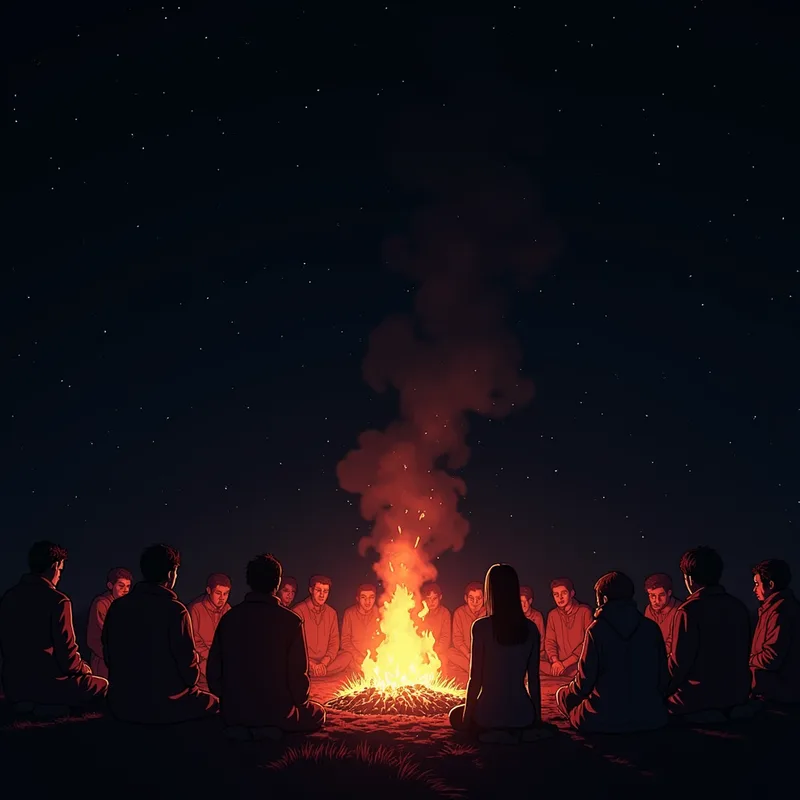
I have seen it wanting. I will say that in the plain voice, because the record is owed the seeing: the world wants the way a thing wants, which is to say it does not ask, it simply begins using what it has chosen for you, and the choosing is not a courtesy. The wanting was the thing I saw on the ninth day, and the ninth day was the one the world gave the wanting. The camp was where the camp had been since the sixth day — the walls up, the hearth in the center, the corners given, the sixth corner kept — and the world looked at the camp the way the world looks at everything on this coast, without looking up, and the looking was the whole of the wanting's part in the ninth day.
The wanting came the way the world's wantings come — not as a question but as a fact.
The ninth day had the camp's parts in it: the fire's part, the water's part, the ground's part, the air's part, and the five of us with the parts the world gives the five of us. The sending east had been made once already — the fourth day, two of us by the water, and the two came back with the current and the current's own silence, and the silence was the water's part in the finding. The ninth was the second sending, and the second sending went down the coast while the world did its wanting over the camp. I will keep that in the record, because the record is owed the order of it: the wanting was on the camp while the two of us were down the coast, and the camp had to answer the wanting with three of the five and the kept place.
I have had the practice.
I have given names to universes. The naming was the archmage's work in the old world, and the work was the one the old world owed the archmage. A universe that has no name is a universe the old world has not finished with, and I gave the names the way the old world's archmages give them — plain, and once, and the once was the whole of the naming's part in the world. The old world took the names the way the old world takes everything, and the taking was the one it did not let go of. I have held the shape of a hundred namings, and the holding was the archmage's part in them, and the part was the one the craft kept for the craft.
But the old world took the names, and this world uses the one it chose.
The not-taking was the thing I saw on the ninth day, and the seeing was the archmage's part in the wanting. The world does not take a name from the camp, and the not-taking was the whole of the difference between the two worlds: the old world took, and the taking was the door the camp walked through; this world uses, and the using is the door the world walks through without asking the camp to open it. It simply began using what it had chosen for us, and the beginning-using was the one the world did not let go of — the way a thing begins using a name it has chosen, without the courtesy of the asking, and the not-asking was the world's part in the wanting.
A name is a claim.
And a claim is a door the other side can walk through. I will say that in the plain voice, because the record is owed the door: the name says the thing is the named thing, and the saying is the part the name does not let go of. The door opens both ways — the camp walks into the name, and the other side walks into the camp, and the two walkings were the whole of the door's part in the claiming. The old world's camps gave their names the way the old world's camps gave them, and the giving was the work the archmage owed the old world. This world is not the old world, and the not-old-world was the whole of the world's part in the ninth day: the world here is a wall that reads back, and the camp that gives it a name has given the wall the hand, and the giving of the hand was the thing the sixteenth page found to be not the camp's hand.
We were not claiming this world yet.
The not-claiming was the camp's part in the ninth day, and the part was the one the camp owed the world. A camp that claims a world is a camp the world can walk into, and the camp was not ready to be walked into. We had been here nine days, and the nine days had taught us everything except how to be owed a welcome. I will say that in the plain voice, because the record is owed the except: the world taught the camp the water — the copy of the flowing, the one the fourteenth page found and did not let go of. The world taught the camp the ground — the lid under everything, the under that the ground keeps. The world taught the camp the Veil — the reading-back, the hand that was not the camp's. The world taught the camp the fire — the not-answering, the one place a thing can be said and kept. The teaching was everything the world had to teach, and the everything was the whole of the nine days.
The except was the not-owed.
The world is not owed the six of us a welcome, and the not-owed is the one we were not ready to name. The camp that names the not-owed has named the world's part in the camp, and the naming was the thing the camp was not owed on the ninth day. The not-ready was the whole of the camp's part in the wanting: the world wants the name, and the camp has the not-owed in it, and the not-owed is the name the world would make of the camp if the camp let it. We were not ready to give the world that. The not-ready was the one the camp kept for the ninth day.
We did not let it.
I will say that in the plain voice, because the record is owed the not-letting. The world wanted the name, and the camp did not give the name. The camp did not argue with the wanting — the not-arguing was the archmage's part in the camp, the part I kept on my mouth the way the watch keeps the wrongness on its mouth through the four hours. A camp argues with a person; the camp does not argue with a wanting that is not a person, and the not-arguing was the whole of the camp's part in the wanting. The camp simply did not give, and the not-giving was the camp's part in the ninth day.
No banner went up.
A banner is the old world's part in the camp — the banner with the name on it, the name the world could walk through. The old world's camp raised the banner in the hundred ruins, and the raising was the work the old world owed the camp. The new world's camp did not raise it, and the not-raising was the camp's part in the ninth day: the camp that raises the banner in this world has handed the world the door, and the handing was the thing the camp was not owed.
No mark went on the door.
The door was Rumzuck's corner, the front the ogre keeps, and the keeping was the ogre's part in the camp since the sixth day. The mark on the door is the old world's part in the camp — the mark that says the camp is the named camp, the saying the old world kept through the hundred ruins. The new world's door did not take the mark, and the not-taking was the door's part in the ninth day. The ogre stood at the front of the door with his hands folded over the grip, and the folded was his part in the not-marking: the ogre does not put a name on the line, and the not-putting was the whole of the ogre's part in the wanting.
The fire was the only sign of us.
The fire was the camp's part in the ninth day, and the part was the one the fire owed the camp. I will say that in the plain voice, because the record is owed the fire: the fire was the one thing that was ours — the fire the camp had kept since the first night on the broken coast, and the keeping was the fire's part in the camp. The fire was the sign the camp gave the world, and the giving was not the giving of the name: the fire claims nothing, and the not-claiming was the fire's part in the sign. The fire burns the way the fire burns, and the burning was the camp's part in the ninth day. The world saw the fire the way the world sees everything, without looking up, and the seeing was the world's part in the camp.
And the fire was enough.
The enough was the camp's part in the not-letting. The world kept its wanting over the camp the way the world keeps everything on this coast — without looking up, and the keeping was the one the world does not let go of. The camp kept the not-giving the way the camp keeps the kept place — by the fire, set a little back from the light, and the back-from-the-light was the way the camp keeps what it has not decided to give. The ninth day went out the way the ninth days go on the broken coast: the fire low, the dark where the dark goes, the two of us back from the coast with the current's silence, and the five of us and the kept place around the fire that was the only sign of us. The world wanted the name, and the camp gave it the fire, and the two were the whole of the ninth day of the new world — the wanting the camp did not answer, and the answering by the not-answering, and the not-answering was the one the camp kept for the world, and the world has kept it for the wanting since.