
Act IV — The Sleeping Water
Page 19 — Not All of Them, to the Same Shore
The count was wrong.
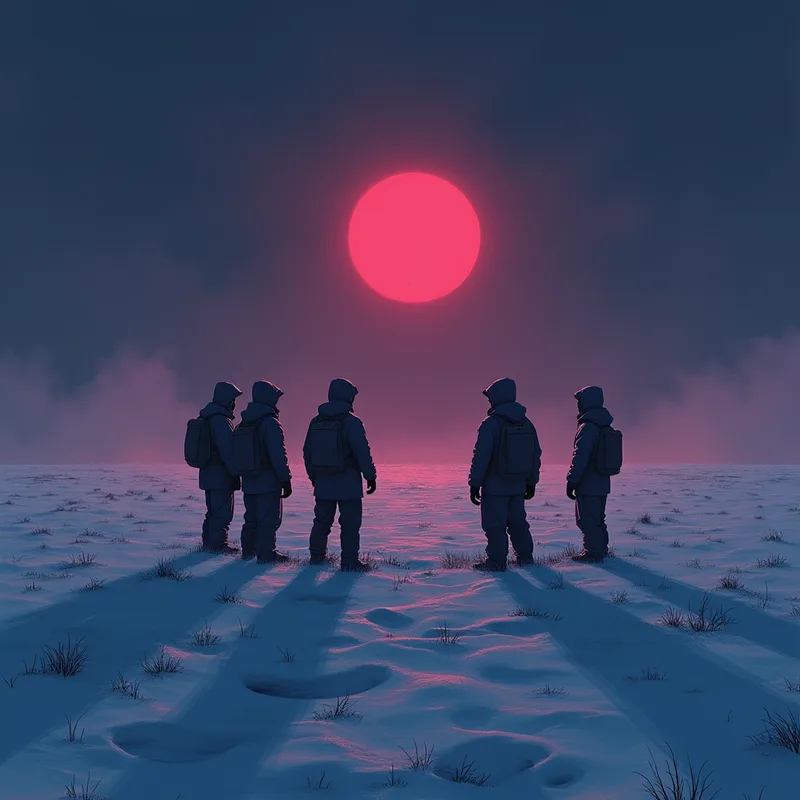
I said it at the impact, in the white, and the saying was the one the white did not take back. I have not said it since, and the not-saying held the first two days, and the holding was the thing the count did not let go of. The count sits in my hand the way a stone sits in a hand that has not decided to throw — present, and heavy, and the heavy is the thing the not-saying gives it. A camp that has a wrong count and does not say it is not a camp. It is a wound wearing a camp's clothes. The wound goes about the camp's work. The wound keeps the watch. The wound takes the water and the wood and the fire's part in the day, and the going-about is the one the wound does not let go of. And the wound does not say the count, because the count is the thing the wound is, and the being is the one the wound keeps.
I said it on the third morning.
The camp was already awake before I stood at the fire.
The third morning had been running the way the mornings run on the broken coast — Wreckreate at the water with his hands in it, the water's part in the day, and the reading he did not speak. Smackage on the sand where the sand's part of the camp is, his palm on the ground, his head down, the ground's part in the day. Rumzuck at the seam, the seam the fifteenth page found new, still new at the third morning, and the scar's part in the day was the looking the ogre gave it. Zahlia by the fire, her hands in her lap, the air's part in the day, and the air around her thin the way the air went thin on the sixteenth page, and the thinning did not go away with the nights. I carried the water's part in the day the way I carry the craft — under the ribs, and the carrying was the archmage's part in the morning before the camp had it from me.
We had the day's bread, and the bread was the old world's bread — the last of the flour the six of us carried through, and the last was the one the camp was running out of. I will keep that in the record, because the running-out was the morning's part in the world: the world is not owed the six of us a welcome, and the welcome was the one the flour was, and the flour is the one the world does not give back. We broke the bread at the fire, and the breaking was the camp's part in the morning, and the part was the one the camp does not let go of.
The third morning is the one I will keep, because the saying is the whole of the morning's part. I said it at the fire, in the plain voice, the way you say a thing that has been sitting in your hand for two days and is getting heavy. The fire was the fire the camp had kept since the first night on the broken coast — the same fire, the same keeping, and the keeping was the whole of the fire's part in the camp. I stood at the fire with the craft under my ribs, and the craft went to work the way the craft goes to work when the saying has to be the whole of the morning. I did not look at the four of them while I said it. I looked at the fire, because the fire is the one thing in the wrong world that does not answer back, and the not-answering was the place the saying owed.
Six went through. Five are here.
The saying was short. I will say that in the plain voice, because the record is owed the short: six went through, and the going-through was the one the white kept for the six. Five are here, and the being-here is the whole of the morning's part in the count. The one word between the two numbers was the one I did not spend — the word that would have been the name. I did not spend it in the first sentence, because the first sentence was the count, and the count was what I owed the fire. The name came in the second sentence, and the second sentence was the one the morning owed the camp.
The fire did not answer.
The fire does not answer, and the not-answering is the one the fire keeps for the world. I looked at the fire the way the archmage looks at a thing that has done its part and is not owed the rest — with the keeping, and the keeping was the whole of the looking. The smoke went where the smoke goes. The coals were the color of the inside of a shell, the color the coast keeps in the dark, and the color was the fire's part in the not-answering. The fire had done its part in the camp since the first night, and the part was the one the fire does not let go of.
I will not tell you what we did with the silence.
The not-telling is the one the record owes the morning. What we did was not enough, and the not-enough is the one I have kept. Rumzuck stood at the seam with his hands folded over the grip, the way his hands go when the ogre has already finished the thing that is being said. Smackage did not get up from the sand. His palm was flat, his head was down, and the lid under everything held the ground's part in the silence. Wreckreate stood at the water's line with his hands at his sides, and the water went in and out at the line without changing for the count. Zahlia stood a little back from the fire with her hands in her lap, and the air around her went thin the way the air went thin on the sixteenth page, and the thinning was the Veil's part in the morning, and the camp did not ask for it.
The place that was empty had a name on it.
The name was Uuaellaen, and the name is the one I have kept since the white. The seat is the one by the fire, set a little back from the light, and the back-from-the-light is the way the camp keeps what the camp is not owed back. The camp did not move the seat on the third morning, and the not-moving was the whole of the camp's part in the count. A camp moves the things it has finished with, and the not-moving of the seat was the camp's word for what the camp had not finished with.
The name was in my mouth before I said it.
I will say that in the plain voice, because the record is owed the before: the name had been in my mouth for two days, and the two days were the whole of the not-saying — the name sitting in the hand of the mouth the way the count sat in the hand of the craft, present and heavy, and the heavy was the thing the not-saying gave it. A man does not hold a name in his mouth for two days and not spend it. The spending was the one I owed the morning, and the morning owed the camp, and the camp owed the seat.
And I said the name.
The saying of the name was the one the record owes the page, because the name is the whole of the morning. I said it in the plain voice, the way the count was said — not louder, not softer, not the way the old world said a name for the one who was not coming back. The old world had a way of saying the names of the lost, and the way was the one the old world's camp kept for the lost, and the keeping was the whole of the old world's part in the saying. I did not use the old world's way. I said the name the way the camp says the count: plain, and once, and the once was the whole of the saying.
The name went out over the black sand, and the going-out was the saying's part in the morning.
The name did not come back. I will say that in the plain voice, because the record is owed the not-coming-back: the name went out over the black sand the way a name goes out when the camp says it at the fire, and the black sand took the light the way the black sand takes the light, and the name was in it, and the name was not in it, and the two beings were the whole of the morning's part in the saying. The gulls went over the broken line without landing. The water went in and out at the line. The world ran on its own, and the running did not change for the name, and the not-changing was the one the world does not let go of.
The saying was the whole of the morning.
The morning went on after the saying the way the morning goes on — the water's part, the wood's part, the fire's part, the watch's part, the five of us and the parts the world gives the five of us. The camp did not fall to pieces at the saying, and the not-falling was the whole of the camp's part in the count. A camp that says its count is a camp, and the being-a-camp is the one the count keeps for the camp. The wound took off the camp's clothes at the saying, and the camp stood in its own shape, and the standing was the thing the record has kept since the first page of it.
The count is right now.
Six went through, and the going-through was the one the white kept for the six. Five are here, and the being-here is the whole of the count's part in the camp. And the one who is not here is the one the camp keeps the seat for, and the keeping is the one the camp does not let go of — the name said once, the seat kept, the count right, and the three keepings were the whole of the third morning of the new world.