
Act III — The Split
Page 18 — Morning, the World Is Not Owed
The first real morning.
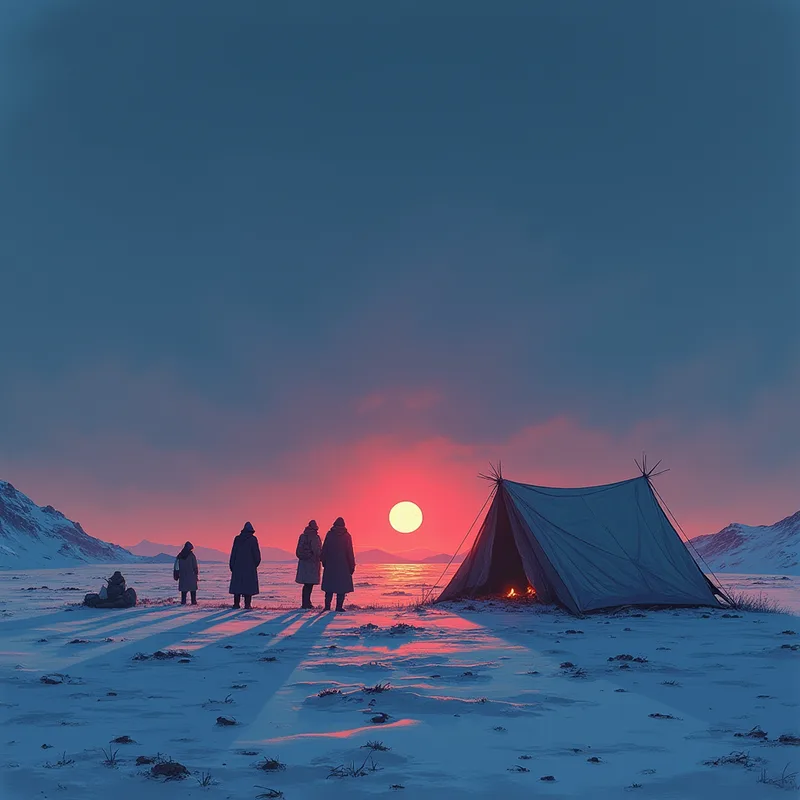
The night handed it over the way the night hands over everything on this coast — without looking up, without a word, the way the new world does everything. The handoff was at the end of the four hours, and the four hours were the night's part in the morning: I gave the watch back to the fire, and the fire took it the way the fire takes a log — without ceremony, and the taking was the handoff's part in the morning, and the part was the one the night did not take back. The seventeenth page owed the dawn, and the dawn is here, and the being-here is the thing the morning owes the record.
The fire was low.
The fire was low the way the fire goes low after a watch — the coals where the coals go, the ash where the ash goes, the smoke where the smoke goes. The smoke was the last of the night standing in the morning, and the standing was the smoke's last word in the morning. I put the craft back under my ribs where the craft goes, and the craft went where it goes, and the going was the archmage's part in the handoff. My hands were still the way the watchman's hands go still at the end of the four hours — not loose, not resting, the still the night keeps in the hands that held it.
The camp came out of the night one at a time.
Rumzuck was already up when I came back to the ring, and the already-up was the ogre's word for the dawn: his shield on his back, his hands folded over the grip the way they had been folded through the four hours, and the folded was the ogre's way of saying that the night had not moved him. He looked at the seam in the rock where the cold light ran, and the looking was the ogre's part — the scar the fifteenth page found new, still new at the dawn, still the one the rock had not let go of. He did not look at any of us. The ogre does not look at the camp for the morning; the ogre looks at the scar, and the scar is the one that owes the camp the day.
Smackage came out of the night the way Smackage does everything — from the ground up, and the ground-up was his part, and his part was the one the ground had. He was already where he had been, his palm on the black sand, his head down, and the only change in him between the night and the morning was the color of the light on his hand. He did not get up. The ogre who reads the ground does not get up for the dawn; the dawn comes to the palm, and the coming-to was the ground's part in the morning.
Wreckreate was at the water before I was back to the fire, and the being-there was his part in the dawn, and the part was the one the water owed him. He stood at the line where the water comes in, with his hands at his sides, and the water went in and out at his feet the way the water goes — the water the fourteenth page had read as a copy of the flowing, and the copy was still the copy at the dawn. He did not read it this morning. I will say that in the plain voice, because the record is owed the not-reading: he stood and looked at the water the way a reader looks at a letter he has already read, and the looking was the morning's whole of him, the part the night had not touched.
Zahlia came out of the night last, and the coming-last was the whole of her part in the dawn. She stood a little back from the fire, where the air's part of the camp is, with her hands in her lap, and the hands were still the way the hands go still when the air has done its part with them. The air around her was thin the way the air went thin on the sixteenth page, and the thinning had not gone away with the night — the Veil was still here, the Veil that reads back, and the reading-back was the thing the morning owed the camp without being asked.
The fifth of them did not come out of the night.
I will keep the sentence plain, because the plain is the one the record owes the seat. There is no sixth at the fire, and the not-sixth is the thing the camp has kept since the white, and the keeping is the whole of the kept place. The kept place is the one by the fire, set a little back from the light, and the back-from-the-light is the way the camp keeps what the camp is not owed back. I did not put a thing in it this morning. The not-putting was the courtesy the camp owes the seat, and the courtesy was the first work of the fifth of the five.
The sun — if it is the sun; I have not decided, and I will not decide today, because the deciding is where the world finds out — came up over the broken line of the coast.
The coming-up was slow, and the slowness was the whole of the dawn's part. The light came over the broken line the way the light comes over a place that is not owed the light — without hurry, without looking up, and the coming-over was the one the coast did not answer. The coast took the light the way the coast takes everything, without looking up, and the without-looking-up was the whole of the morning's part in the world. The black sand took the color of the inside of a shell — the color the seventeenth page had on at the end of the watch — and the color went out of the sand the way the color goes out when the light decides to be here, and the deciding was the morning's part, and the part was the one the sand did not argue with.
There was no wind off the water this morning.
The stillness was the one I have kept fewer watches in. I have kept a watch in winds I will not name, and I have not kept one in more stillness than that morning. The water went in and out at the line with the sound it has when the wind is not here, and the sound was the whole of the coast's part in the dawn — not the old world's sound; I will say that in the plain voice, because the record is owed the not-same. The old world's water went in and out with the wind in it, and the wind was the part of the old world's water the old world's camp heard in its sleep. This water goes in and out without the wind, and the without-the-wind is the one the fourteenth page kept for the water's part in the world.
The smell came off the black sand with the light.
The smell was the smell of the water's part in the morning — the salt of it, the not-salt of it, the part of it I will not name, because the naming is where the world finds out, and the finding-out is the one the record does not owe the world. I have smelled the old world's shores, and the smelling was the whole of the old world's part to me: the kelp of it, the fish of it, the wood of it from the wrecks, and the gulls overhead, and the gulls were the part of the old world's shore the old world's camp heard without thinking about it. There are gulls here. I will say that in the plain voice: the gulls fly the way the gulls fly, and the flying is the one the sky does not owe the record. But the gulls do not land on the black sand, and the not-landing is the whole of the gulls' part in the morning.
The five of us on the black sand at full morning.
I looked at them the way the record looks at the camp — not with the eye but with the keeping, and the keeping was the whole of the looking. The four of them and me, and the four-of-them-and-me is the one the camp has kept since the white. Rumzuck at the seam with his hands folded over the grip, Smackage on the sand with his palm on the ground, Wreckreate at the water with his hands at his sides, Zahlia by the fire with her hands in her lap, and me at the fire where the craft's part of the camp is, and the me-at-the-fire is the one the archmage owes the record. The five of us on the black sand, and the black sand was the whole of the ground the world owed us that morning, and the owing was not a welcome.
The world did not come with the story.
It was already here, running on its own, and the running is the one the world does not let go of. The running was in the water's part, in the gulls' part, in the smoke's part, in the color's part, in the five of our parts — the world ran on its own while the night ran on its own, and the two runnings did not meet, and the not-meeting was the whole of the world's part in the morning. The story did not come with the world, and the not-coming was the thing the record has kept since the first page of it: the story is the one I keep, and the world is the one that does not keep me, and the two not-keepings were the whole of the first morning of the new world.
The world is not owed the six of us a welcome.
I have said it before and I will say it again, because the saying is the thing that is true. The six of us went through, and the going-through was the one the white kept for the six. The five of us are on the black sand, and the being-on-the-black-sand is the whole of the morning's part in the count. The world is not owed, and the not-owed is the one the world does not let go of — the welcome was never the world's part; the welcome is the part the old world's camp had and the old world's shore gave, and the giving was the one the new world does not have. The not-having is the whole of the first morning, and the whole is the thing I have kept.
I looked at the four of them. The four of them looked at the world.
And the world, which had been running on its own, did not stop, and did not look up, and did not answer. The not-stopping was the first thing, and the first thing was the whole of the not-answering: the water went in and out at the line, the gulls went over the broken line without landing, the smoke went where the smoke goes, and the three goings were the world's part in the morning, and the part did not change for the five of us on the black sand. The not-answering was the first morning of the new world, and the first morning is the one the world does not let go of — the morning that does not owe the six of us a welcome, and the not-owing is the thing I have kept since the first page of it, and the keeping is the one the morning owes the record.