Act I — The Crossing
Page 4 — Uaellaen's Last Sight of the Old World
For one page the old world was behind us. I have kept that page, and it is the only thing I carried through, so I will spend it here.
I will tell you what the page was, because the record is owed the telling. It was not a moment, and it was not a breath, and it was not the length of a prayer. It was a page of the falling — the page where the white thinned enough for the old world to be seen again, and the seeing was the one the white did not do. It came and went the way a door in a dark room comes and goes: not with the hand, with the knowing. I had the knowing, and the knowing was the one that was still mine. I will not say that I chose to look back. I will say that the looking was the one I owed, because a man who does not look back at the last of the old world is a man who has not yet admitted that the old world was owed the looking.
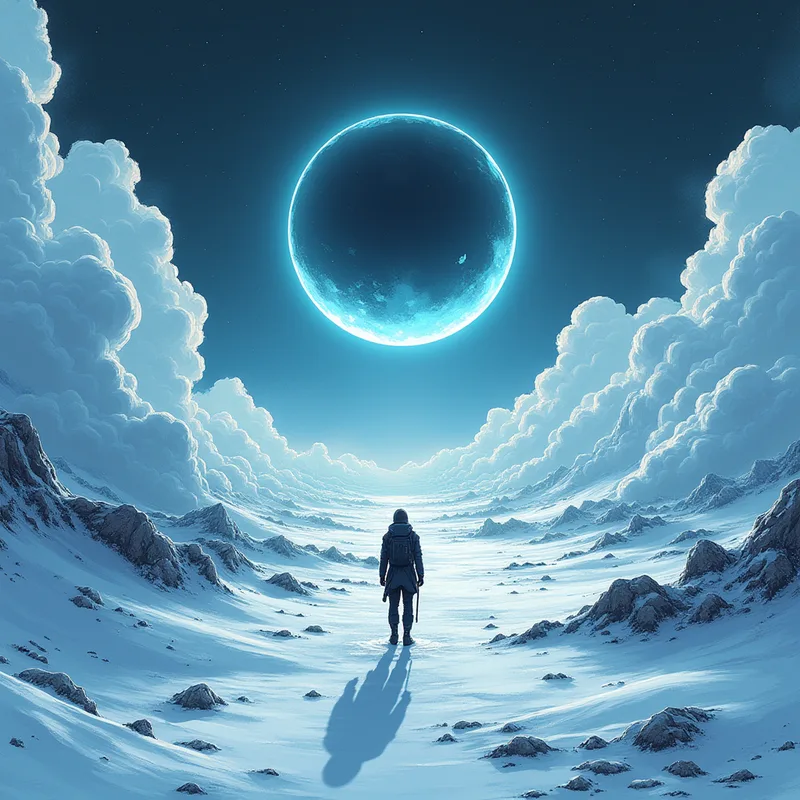
The old world was behind us, and the behind was the one part of the white that had a place. The white thinned toward the south — the south, the word is a guess, and I keep my guesses in a separate place, but the guess is the one I owed, because the dark had come up out of the south, and the coming up had been the last motion of the old world. Through the thinning, the world came back the way a face comes back in a mirror you have not looked into in a long time: not all at once, but all at once, the way a thing is when it is a thing. The plain was there. The circle was there. The dark that had come up out of the south was there, standing at the rim of the world, and the standing was the last of the old world, and the last was the one it did not spend.
The ice of the Nameless Tundra was going small.
I will tell you what I mean by going small, because the small is the whole of the page. The tundra was below and behind, the way the world goes below and behind a man who is falling through it. The tundra has no name. I have used that against it for a hundred years — the maps had always left it white, the white of the maps, and the white of the maps was the one I had kept, because a place with no name is a place the world has not claimed, and I have spent a hundred years in the not-claimed, and the not-claiming was the one the tundra owed me and I owed it. But the ice had a color. I want the record to be exact about the color, because the color is the truest thing on this page, and I have spent a hundred years learning that the truest thing is not the thing that sounds the truest.
The color was the color of a thing that has been cold so long it has forgotten how to end.
I have seen ice in the old world. I have seen the ice of the tundra, which is the ice of the tundra, and the ice of the wells, which is the ice of the wells, and the ice of the sanctums where the gods sat and did not sit, which is the ice of the sanctums. The ice of the old world had a color that was the color of the cold, and the cold was the color of the ice, and the two of them were the one the world kept between them. This ice was not that. This ice was the color of the forgetting. The cold had gone on so long in it that it had forgotten the ending, the way a word forgotten so long it forgets it was ever a word — not gone, only no longer owed. I want the record to be careful about that, because the careful is the whole of the page: the ice had not ended. It had forgotten how to end. And the forgetting was the one the world did not do, and the not-doing was the thing I have kept the longest, because a world that ends its cold is a world that owes the cold the ending, and this cold was not owed it, and the not-owing was the whole of the tundra.
The glaciers went down and out, the way a hand goes down when it is letting go, and the letting-go was the last of them.
I will give you the glaciers, because the record is owed them. They were the bones of the tundra. The tundra has no name, but the glaciers were the bones, and the bones were the one the tundra owed to itself. They ran down and out through the thinning — long, slow, the color of the forgetting under the silver of the ice — and they went the way a hand goes down when it is letting go. I have seen a hand go down when it is letting go. I have seen the hand of a man who has held a word too long, the word that is the whole of the man, and I have seen the letting-go in the knuckles before the letting-go was in the air. The glaciers did not break. I want the record to be exact about that, because a glacier that breaks is a glacier that is owed the breaking, and a glacier that is owed the breaking is a glacier the world has finished with. These were not that. These went down and out, and the going out was the letting-go, and the letting-go was the last of them, and the last was the one the tundra did not spend.
I watched it the way you watch a thing you are not going to be able to argue with. I have had the practice.
I have watched the old world go, in the sanctums, in the halls where the gods sat and did not sit. I have watched the ice go, in the tundra, in the wells, in the keeping of the order, where the ice is kept the way the words are kept — cold, and even, and without a color that is not the ice's own. But this watching was not that. This watching was the watching of the last. I did not argue with it. I will say that plainly, because the plainly is the whole of the page: a man who argues with the last of the old world is a man who has not yet admitted that the last is owed, and the last was owed, and I owed it the watching. I stood in the white with my hands open, the way I had stood in the circle at the south rim, and I watched the tundra go small, and the watching was the archmage's part, and the part was the one I owed.
I will tell you what the others did with the page, because the record is owed their part. The white was around the six of us, and the white did not do the seeing for them the way it did for me, and the not-doing was the one I kept. I looked for the ogre, and the ogre was where the ogre was — the hands over the grip, the grip over the shield, the shield over the line. He did not look back. I want the record to be careful about that, because the not-looking-back was the one the ogre did not do: the ogre had looked back, once, at the rim of the south, and the once was the whole of his page, and the whole of his page was the one he spent, and the spending was the one he did not do a second time. I looked for the cleric, and the cleric was where the cleric was — the ward low and even around the six of us, his face turned the way the ward was turned, toward what was coming, not what was going. I looked for the erudite, and the erudite was where the erudite was — the feet apart, the weight even on both of them, his eyes on the thinning the way he puts them on a river he has not finished reading. I looked for the woman, and the woman was where the woman was — the hands flat, the fingers a little spread, the air around them going thin, and she was looking at the old world the way she looks at a word she does not know: without reaching for it, and without turning away from it. And I looked for the sixth, and the sixth was where the sixth was — the back to the south, the way the sixth always stands, and the always was the one the old world put in him before the old world had put it in the rest of us.
The tundra went small. The small went gone. And the page was spent.
I will tell you what the spending was, because the record is owed it. The small went gone the way a word goes gone — not with the hand, with the knowing. The thinning closed over the place where the tundra had been, and the closing was the one the white did, and the doing was the one I kept. I have been in this universe a while now, and the while has taught me that the spent is the one that is kept: a world that spends its pages does not keep them, and the keeping was the one I did. I will not say that I grieved, because the grieving is not the word, and the word is the one the record keeps. I will say that I kept. The tundra went small, the small went gone, and the page was spent, and the spending was the one I have kept since the first page of this story — because a story that does not keep its last page of the old world is a story the old world takes back, and the taking back is the one I will not do.