Act I — The Crossing
Page 3 — The Unnamed Hand
Something pushed us. I want the word to be careful.
I have had a hundred years to find a better word, and I have not found it, so I will give you the word I have and the shape of the thing that went with it, because the shape is the true thing and the word is not.
It had no face. I will say that plainly, and then I will say what I mean, because the plainly is not the whole of it. No face is not the absence of a face, which is a thing — the absence of a face is a place where a face should be and is not, the way a door is where a wall should be and is not. It had no face at all, the way a wall has no voice, the way a winter has no hand, the way a debt has no mouth. There was no place on it where a face would have been. There was only the white, and the white was not the thing, and the thing was not the white, and the between of them was the one I have kept, because the between is where the shape was.
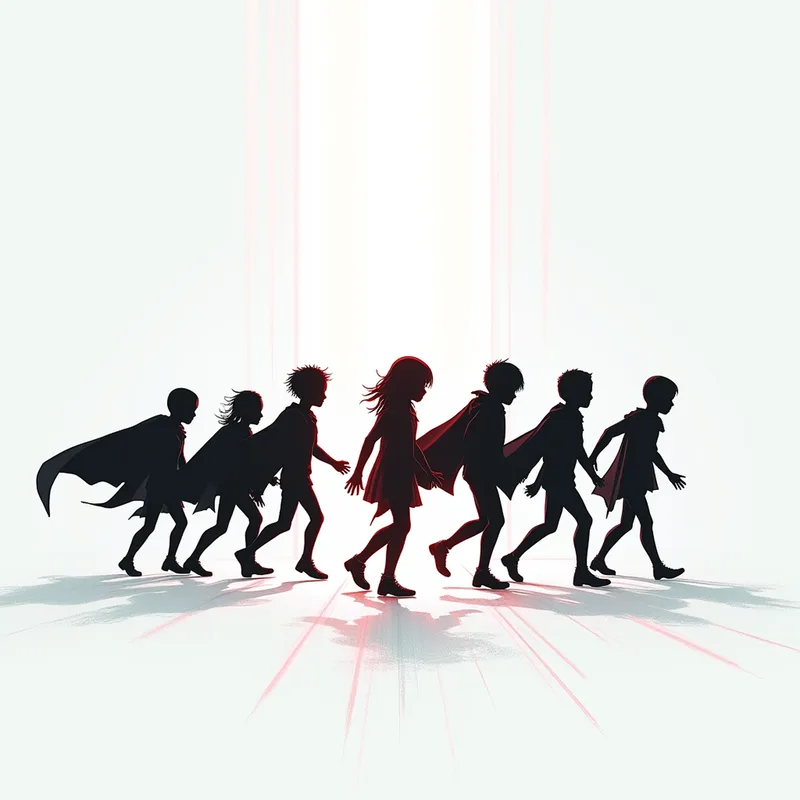
I will give you the shape, because the shape is the record, and the record is owed the archmage's seeing. There was a part of the white that was not the white — a place where the light stood still instead of falling, and the standing-still had the shape of a thing, and the shape was looking at us. Not at me. At the six of us, the way a mill looks at the water it is going to take. The shape was not a hand. I want the record to be exact about that, because the hand is the word that keeps coming to me, and I will not use it. A hand is a thing that reaches, and this did not reach. It stood still, and the standing-still was the one part of the white that had a place, because a place is a thing you can put your hand on. I put my hand out toward it once, in the white, and the hand found no place to put, and the not-finding was the one I owed the record.
What it had was a will, and the will was the only part of it that was there. I will tell you what the will was like, because it is the truest sentence I can give you about that place, and I have spent a hundred years learning that the truest sentence is not the one that sounds the truest. The will was not kind, and it was not unkind either. The world I came from has a word for each of those two. It has a word for the kind, and the word is warm, and the word is a thing you can put in a hand. It has a word for the unkind, and the word is cold, and the word is a thing you can feel in the throat. And it has no word for the between, and the not-having is the honest part of the record, because a world that has no word for a thing it has felt is a world that has not yet admitted the thing it has felt. I have spent a hundred years with words, and I still do not have one for that between, and I will not invent one here, because the inventing is the one thing I will not do on the third page of a story that has already lost a man.
I will tell you what I did, because the doing is the record, and the record is owed the archmage's part. I did not ask it. I will say that plainly, because the plainly is the whole of the third page. The asking is my first work, and the work does not lie — but I did not ask this. A man who asks a thing that is not owed the asking is a man who has not yet admitted the thing is not owed the asking. I stood where the six of us stood, in the circle we had made of ourselves in the white, and I held the shape of the story, and the holding was the archmage's part. My hands stayed open. I will not say that I was afraid, because the afraid is not the word. I will say that I was careful, and the careful is the word the record keeps.
I will tell you what the ogre did, because the ogre is the record, and the record is owed the ogre's part. He did not look at it. I want the record to be exact about that, because the not-looking was the one the ogre chose. The ogre looks at a thing the way a shield looks at a line — with the whole of the body. But he did not look at this. He looked at the white, and he put his hands back over the shield's grip, because a man who takes his hands off the grip in the white is a man who has not yet decided whether the fight is worth having, and the deciding was not his to owe. I will not say that the ogre was afraid. I will say that the ogre held, and the holding was the line, and the line was put in the six of us before any of us knew it was there.
I will tell you what the other two did, because a page that writes three of the six and not the other two is a page that is lying about the six. Zahlia did not speak. She had not spoken since the old world went out under us, and I do not write that as a failure, because I have watched her choose silence the way a mason chooses the stone she will not lay — it is a decision, not an absence. She stood with her face turned up at the sky of the white, and that was the decision: she would not give the thing the front of her, and the not-giving was the part of her I have kept the longest, because a face turned away from a thing in the white is the truest thing I have seen in that place. Smackage was on the ground. Not fallen. Kneeling, with his palm flat on the sand of the wrong ground, head down, reading it the way he reads the ground at home — with the whole of the ear of him, and the not-speaking was the part of him the record has to carry, because a man who reads the ground in the white is a man who has decided that the ground is still worth reading, and the deciding was the part of the six that the white did not take.
I will tell you what the cleric did, because the cleric is the record, and the record is owed the cleric's part. He did not raise his ward. I want the record to be careful about that, because the not-raising was the one the cleric chose. The ward was already around the six of us, low and even, without a color I could name. He had put it there before the white, at the last of the old world, the way he puts everything — with the whole of himself, and the whole of himself was the one thing the white did not take. He did not raise it, because a record that writes the ward as raised is a record that lies. The ward held the way it had held a hundred times before, and the hundred times were the whole of the line.
I will tell you what I felt in the body, because the body is the record. The will of the thing was not on me. It was on the six of us, the way a weight is on a thing that has been put down. It was not a pressure. I felt it the way you feel a door in a dark room: not with the hand, with the knowing. The knowing was still mine. My craft under my ribs turned over once, the way a sleeper turns over in a dream he does not know he is having, and the turning-over was the one part of the white that was not mine. I looked for the ogre's hand, and the hand was still there, and the still-there was the whole of the line. The cleric's ward was still low and even. The six of us were still six, and the being-six was the one the thing did not take, and the not-taking was the whole of the third page.
I have not said who it was. I will not. Not because it is a secret I am keeping for you — I am not a man who keeps things — but because there is nothing to say. A story that gives the thing with no name a name has already lost, and I have lost enough. The demi-god of the drop is not a word I will put in this record, because the putting is the one I owe the world, and the world is the one I have not yet owed it to. I will say only this, and the saying is the whole of the third page: the thing had no face, and the no-face was the one I kept. The thing had no name, and the no-name was the one I kept. The thing pushed the six of us through the thin place, and the pushing was the one the white did, and the doing was the one I kept, because a story that does not keep its pushing is a story the world takes back, and the taking-back is the one I will not do.