
Act V — First Fire
Page 31 — The Keeping
The camp kept its ground in the tundra and its distance from the water.
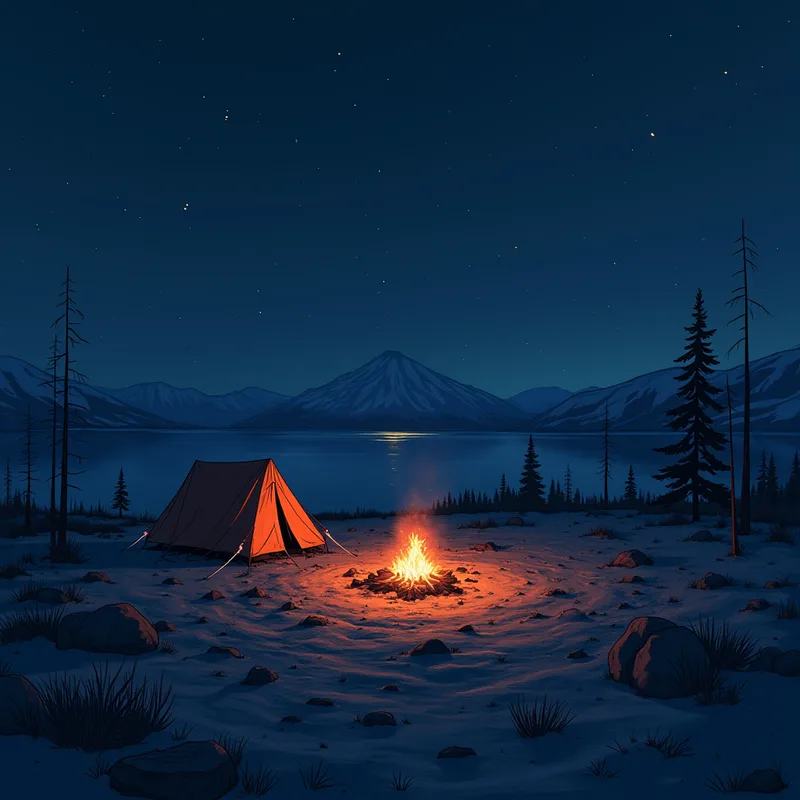
I will keep the order of the keeping in the record, because the record is owed the order: the warning had been said at the water's edge on the sixteenth morning, and the saying was the one the water-reader owed the camp. The camp had taken the warning the way the camp takes the thing that is the law, and the taking was the camp's part in the keeping. The keeping began on the sixteenth, and the beginning was the whole of the keeping's part in the new world — the first of the new world's part in the camp, after the sixth corner was kept and the name came and the law was said. The camp kept its ground in the tundra, and the ground was the one the camp owed the tundra; and the camp kept its distance from the water, and the distance was the one the camp owed the lake. The two keepings were the camp's part in the sixteenth, and the sixteenth was the one the camp kept for the keeping, and the keeping is the one the camp has kept since.
We kept the distance the way the camp keeps everything — the way a ward keeps a line.
I will keep the keeping in the record, because the record is owed the keeping. The camp keeps a line the way the camp keeps a line — not with the force of the camp, but with the keeping of the camp, and the keeping was the one the camp owed the line. A ward keeps a line, and the keeping-of-the-line was the ward's part in the camp: Zahlia's wards keep the Veil from reading the camp, and the keeping was the Veil's part in the camp, and the Veil kept the line the way the Veil keeps everything on this coast — without looking up. The camp kept the distance the way the ward keeps the line, and the keeping was the camp's part in the distance. The lake was east. The camp was west. And the between was the one the ground gave us, and the ground's giving was the first gift the new world gave us, and we did not spend it. I will keep the not-spending in the record, because the record is owed the not-spending: the gift was the between, and the between was the one the ground gave the camp, and the camp did not spend the between — the camp kept it the way the camp keeps the kept place, back from the light, and the back-from-the-light was the camp's part in the not-spending.
We measured it in walking: a day's walk to the water, and a day's walk back, and the between the length of a watch.
I will keep the measuring in the record, because the record is owed the measuring. The camp measured the between the way the camp measures everything — in walking, and the walking was the one the camp owed the ground. I walked it on the seventeenth morning, and the walking was the archmage's part in the measuring: from the camp to the water's edge, by the tundra, the lid under my feet, and the lid was the one the ground kept under the between. The walk was a day, and the day was the one the ground owed the camp — the day of the wrong world, the day that does not owe the camp its length, and the not-owing was the ground's part in the day. I walked it back on the seventeenth afternoon, and the going-back was the same length, and the same-length was the ground's part in the between. And the between, I will say in the plain voice, because the record is owed the between: the between was the length of a watch — the length of the four hours, the watch the camp keeps at the fire, and the watch was the one the camp owed the between. The between was the length of the watch, and the watch was the length of the keeping, and the keeping was the length of the year, and the year is the one the keeping became.
The between was the camp's whole of the year.
I will keep the year in the record, because the record is owed the year. I will say the year in the plain voice, because the record is owed the saying: the between was not the camp's whole of the day — the day was the one the ground owed the camp, and the ground did not owe the camp the between. The between was the camp's whole of the year, and the year was the one the keeping became: the camp kept the between the way the camp keeps the kept place — back from the light, and the back-from-the-light was the camp's part in the keeping. The year went the way the year goes on the broken coast, and the going was the one the coast owed the camp: the fire low, the dark where the dark goes, the water flat where the water goes, and the three were the coast's part in the year. The camp kept the between for the year, and the keeping was the camp's part in the year, and the year kept the between for the camp, and the two keepings were the whole of the keeping's part in the new world.
We built the walls.
I will keep the walls in the record, because the record is owed the walls. The walls were the camp's part in the keeping — the walls of black rock, set dry, the way the coast's own walls were set, because the coast's walls were the first instruction, and we did not have the arrogance to improve on them. The walls had been up since the sixth day, and the up was the camp's part in the walls: the camp had built the walls the way the old world taught it — the way the six of us had built a hundred camps in a hundred ruins in the last of the old world — and the building was the old world's part in the camp. The new world's camp kept the walls the way the new world's camp keeps everything, and the keeping was the new world's part in the walls. The walls kept the camp in the tundra, and the keeping was the walls' part in the keeping, and the keeping was the camp's part in the walls, and the two keepings were the whole of the walls' part in the year.
We kept the fire.
I will keep the fire in the record, because the record is owed the fire. The fire was the camp's part in the keeping — the fire in the center, the hearth where the hearth goes, and the hearth was the one the camp owed the center. The fire had burned since the first night on the broken coast, and the burning was the camp's part in the fire: the fire was the one thing that was ours, and the ours was the one the camp kept since the first night. The new world did not give the camp the fire, and the not-giving was the new world's part in the fire — the new world gave the camp the ground, and the ground was the one the new world owed the camp; the new world gave the camp the water, and the water was the one the new world owed the camp; but the fire was the camp's, and the camp's was the one the new world did not take. The camp kept the fire the way the camp keeps the kept place — in the center, and the center was the one the camp owed the fire, and the fire owed the camp the burning. The fire burned through the year, and the burning was the fire's part in the keeping, and the keeping was the camp's part in the fire, and the two keepings were the whole of the fire's part in the new world.
We sent two of us east on the fourth day and the ninth and the fourteenth, by the water, and the sending went around the lake, never to it, and the around was the whole of the keeping.
I will keep the sending in the record, because the record is owed the sending. The sending was the camp's part in the finding — the finding is the one the camp owes the lost, and the lost is the one down the coast, and the coast is the one the sending goes down. The sending had been made three times by the sixteenth — the fourth day, the ninth, and the fourteenth, and the three sendings were the camp's part in the coast. The sending went by the water, and the by-the-water was the way the camp kept the water between the going and the coast, and the between was the one the water owed the sending. The sending went around the lake, and the around was the whole of the keeping's part in the lake: the warning had said the camp does not send into the lake, and the not-sending was the one the camp owed the lake; the sending went around it, and the around was the camp's part in the not-sending — the camp kept the finding, and the finding was the one the camp owed the lost, and the camp kept the not-sending, and the not-sending was the one the camp owed the lake, and the two keepings were the camp's part in the year.
The camp did not spend the between.
I will keep the not-spending in the record a second time, because the record is owed the not-spending: the ground had given the camp the between, and the giving was the first gift the new world gave the camp, and the first-gift was the one the new world owed the camp. The camp spent nothing else the new world gave it — the ground the camp kept the way the ground keeps the lid, and the keeping was the ground's part in the camp; the water the camp read the way the water-reader reads water, and the reading was the water's part in the camp; the between the camp kept the way the camp keeps the kept place, and the keeping was the camp's part in the between. The camp did not spend the between, and the not-spending was the whole of the camp's part in the keeping: the between was the length of a watch, and the watch was the length of the keeping, and the keeping was the length of the year, and the year was the one the camp kept for the lake, and the lake kept it for the sleep, and the sleep is the one the story has kept since the first page of it.