
Act IV — The Sleeping Water
Page 21 — The Argument
Go looking, or stay.
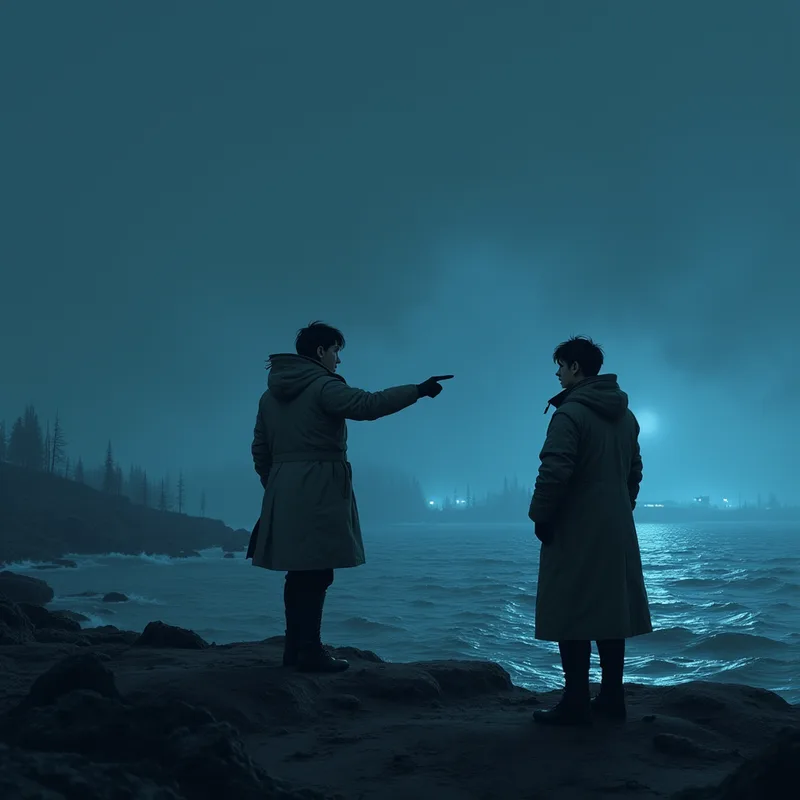
The camp's first real fight, and it was not about the enemy — it was about who we were willing to lose. I will say that in the plain voice, because the record is owed the about: the fight was not about the scar, and the not-about was the whole of the fight's part in the camp. The fight was not about the water, and the water's part in the fight was the part the two readers had already given the camp. The fight was about the one who was not here, and the about was the thing the camp did not let go of through the evening, and the not-letting-go was the fight's part in the night.
It came at the fire, the way the camp's fights come — not as a question but as a fact.
The evening was the evening the camp had: the bread broken, the water carried in, the fire where the fire goes. The five of us around it the way the five of us were around it on the third morning — Rumzuck at the place the ogre keeps, his hands folded over the grip; Smackage on the ground where the ground's part of the camp is, his palm on the sand; Wreckreate at the water's line, because the water's part of the evening was the water's part of the day and the part was the one he did not give up; Zahlia a little back from the fire, her hands in her lap; and me at the fire, where the craft's part of the camp is. The kept place was where the kept place goes — by the fire, set a little back from the light, and the back-from-the-light was the one the camp had not moved since the white.
Rumzuck said go.
The ogre said it the way the ogre says everything — which is to say he had already finished the argument and was waiting for the rest of us to catch up. We do not leave. We are the line, and the line does not leave the line. If one of us is down the coast, the coast is where the line goes. He did not look at the kept place while he said it. I will say that in the plain voice, because the record is owed the not-looking: the ogre did not look at the seat, and the not-looking was the whole of his looking. The ogre looked at the fire, and the fire took the saying the way the fire takes everything, and the taking was the fire's part in the argument. His hands were folded over the grip the way they had been folded all the evening, and the folded was the ogre's part in the saying — the hands of a man who had already gone, and the already-gone was the thing the ogre did not let the camp see.
The saying stood in the fire.
I will keep it plain, because the plain is the one the record owes the fire: the ogre's saying was a line, and the line was the whole of his part in the argument. We are the line, and the being-the-line was the thing the ogre owed the camp since the old world. The line does not leave the line, and the not-leaving was the one the ogre did not let go of through the old world, and the old world's part in the saying was the whole of the old world's part in the camp. If one of us is down the coast, the coast is where the line goes — and the coast's part in the saying was the one the ogre had already given the camp on the fifteenth page, when the ogre found the scar new and the coming-back was not a thing you argue with.
Wreckreate said go — but east, by the water.
The but was the whole of his part in the saying. He stood at the water's line with his hands at his sides, and the standing was the one the water-reader keeps for the camp: he did not leave the line of the water to say the saying, and the not-leaving was the whole of the water's part in his part. Go, he said, but east, by the water, in a way that keeps the water between us and whatever the water had. The keeping-between was the one he owed the water — the water the fourteenth page had read as a copy of the flowing, and the copy was the thing the water did not let go of. He had said east on the third morning, and the saying-east was the one he did not take back: the current ran east, and the running-east was the whole of the water's part in the not-knowing. The two of us who went would go by the water, and the by-the-water was the way the camp kept the water between the going and the water's own part, and the between was the one the water did not let go of.
He said it without kneeling. I will say that in the plain voice, because the record is owed the not-kneeling: the water-reader does not say the water's part standing, and the not-standing was the thing the camp saw in him, and the seeing was the camp's part in his saying.
Zahlia said stay.
She said it a little back from the fire, the way she says everything — with her hands a little raised, and the a-little-raised was the whole of her part in the saying. The air around her went thin, the way the air went thin on the sixteenth page, and the thinning was the Veil's part in the argument, and the Veil's part was the one the camp did not ask for. The Veil reads us, she said, and a camp that moves is a camp that is read. I do not want to be read by something that is not a person. The reading was the one the Veil kept for the camp since the sixteenth page — the wall that reads back, the hand that was not hers, and the not-hers was the whole of the Veil's part in the wall. A camp that moves is a camp that is read, and the being-read was the thing the Veil owed the camp that moved, and the owing was Zahlia's part in the saying. She did not look at the water while she said it, and the not-looking was her part in the water's part: the water's go and the Veil's stay were the two parts the camp had to choose between, and the choosing was the whole of the evening.
Smackage said the ground would tell us when the time was, and the time was not yet.
The ogre said it without getting up, the way the ogre says everything — the palm flat on the sand, the head down, the lid under everything holding the ground's part in the saying. The not-yet was his part in the argument, and the not-yet was the thing the ground owed the camp: the ground knows, and the knowing was the one the ground kept since the third morning, and the keeping was the ground's part in the waiting. The ground did not say east again. The ground said not yet, and the not-yet was the ground's part in the argument — the ground's way of saying that the ground had the saying, and the having was the one the ground did not let go of until the ground was ready to give it.
I listened.
It is what I do, and the listening is the one thing that does not lie. I sat at the fire with the craft under my ribs, and the craft went to work the way the craft goes to work in the argument — not in the argument, and the not-in was the whole of the craft's part in the listening. The craft does not argue. The craft listens, and the listening was the one the archmage owed the camp, and the owing was the whole of my part in the evening. The four sayings stood in the fire the way the sayings stand — Rumzuck's go, Wreckreate's go-but-east, Zahlia's stay, Smackage's not-yet, and the four sayings were the whole of the camp's part in the argument, and the part was the one the fire held while the camp did.
While I listened, I did the thing I have done a thousand times.
I held the shape of the argument, and the holding was the one the archmage keeps for the camp: the shape is the thing the craft sees when the craft has the four sayings in it, and the seeing was the whole of the craft's part in the holding. The shape had a place in it that did not fit, and the not-fitting was the thing I did not show them, because the not-showing was the one the camp owed itself — a camp that shows the place that does not fit has shown the camp the place where the camp is wrong, and the showing was the whole of the place that did not fit. I will not write down the place. I will say only this: the four sayings were the four parts of the camp, and the four parts were the whole of the camp, and the camp was the one the shape did not let go of — but the shape had a fifth part in it, the part the kept place gave it, and the fifth part was the one none of the four sayings had a place for. The kept place was by the fire, set a little back from the light, and the back-from-the-light was the one the shape saw in the argument, and the seeing was the shape's part in the evening.
The four of them argued the rest of the evening, and the arguing was the camp's part in the night.
Rumzuck and Wreckreate took the go, and the taking was the whole of their part: the ogre's line and the water-reader's water, the two parts that kept the coast between them and the camp. Zahlia kept her stay, and the keeping was the one the Veil owed her. Smackage kept his not-yet, and the keeping was the ground's part in the camp. The fire held the four sayings, and the holding was the fire's part in the evening — the fire that does not answer, the fire that takes the sayings the way the fire takes everything, and the taking was the whole of the fire's part in the argument.
And the not-showing was the one I kept.
The not-showing was the place that did not fit, and the place was the whole of the shape's part in the evening. I did not show them where it was, and the not-showing was the thing the record is owed: the archmage holds the shape of the argument, and the holding was the one the archmage keeps for the camp, and the camp did not know that the shape had a place in it that did not fit, and the not-knowing was the camp's part in the shape. I kept it the way the camp keeps the kept place — by the fire, set a little back from the light, and the back-from-the-light was the one I did not give the camp that night. The fourth page of this act is owed the water's edge, and the water's edge is where I said the saying, and the saying is the one the next page keeps.