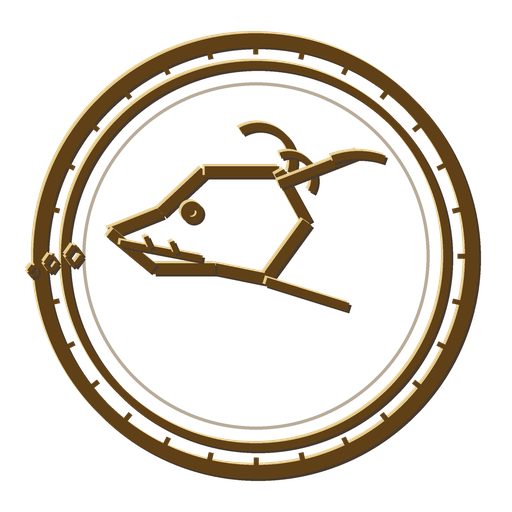
Overview
The Bog-Hog is the great bristled beast the deep marsh keeps. It stands 1.15 m at the shoulder, it moves through the black mud with a slow, deliberate way, and it considers the bad temper a promise rather than a fault. Where the sounder goes, the mud knows it is watched, and the watching is the whole of the hog's own, because the hog that keeps the sounder keeps the marsh, and the marsh is the hog's own.
Habitat
The Bog-Hog keeps the black mud of The Mire Barracks — the deep marsh and the constant drip and the broken stone. It is the marsh's own, and the marsh is the hog's, and the hog keeps the marsh the way the marsh keeps its mud. It needs three things: mud that will hold the tusk, a sounder bad enough to lead, and a ground full of the small warm prey that fails to run. It is settled with the Ogres who keep the barracks — the hog is the barracks' own temper, and the ogre that has not fought the hog in a season is called the one who forgot the word. The sounder moves with the season the way the ogres do, deeper in the cold months, to the upper marsh in the green, because the sounder that has not moved with the mud has moved without the mud, and the moving without the mud is the whole of the hunger.
Appearance
The bog-hog is the broad, heavy shape — broad through the jaw, heavy through the flank, with the head set forward and the whole of it reading as one low line from tusk to rump. The boar stands 1.15 m at the shoulder and carries 92 kg, broad through the jaw and heavy with the tusk; the sow stands 1.05 m, 68 kg, finer through the neck, with the longer nose and the worse temper, because the temper is the whole of the sow's own. The bristle is coarse and deep, dark umber over the back where the marsh sun has never reached, darkening to a mud-brown along the flank where the ground rubs it flat; the jaw and the lower lip carry a clean bone-white that reads as a flash in the mud, and the belly bristle is a faded, honest straw. The eye is small, deep-set, a muddy brown that reads as the mud itself, and it does not glow. The tusk is the whole of the face: the lower pair curves up and in, set to carry, and the upper pair curves down and out, set to carry the ogress who made it — the tusk is rust-red, not bone, and the red is the marsh's own. Males carry the line in the jaw and the tusk; females in the neck and the temper. Elders are marked by a bristle gone pale silver-brown and a tusk worn to an honest curve — an old bog-hog leads no sounder, and the sounder that follows the old tusk is called the lost line.
Behaviour
The bog-hog does not run the way the warm prey runs — it stands its ground in the mud, and the standing is the whole of the beast's own. The bad temper is not a fault and not a fault to be fixed; it is the promise, and the hog that has not kept its temper has not kept the marsh. It fights the ogre the way the ogre fights it — at volume, without the word, and the fighting is the whole of the barracks' own, because the ogre that has fought the hog is the ogre who has kept the word. When the fight ends, the hog takes the tubers from the ogre's own hand, because the hand that has fought the hog is the hand that feeds it, and the feeding is the honour. It is patient with the sounder, worse than the sounder, and it will hold a ground through the whole of a frost because the ground that leaves the frost has left the marsh. The young are raised in the sounder with the ogres' own loud ones, and the young that keep their temper through the first frost are called the mud-kept.
Natural Weapons & Defenses
The weapon is the tusk — the rust-red, curved pair that carries the ogress who made it, and the bad temper that sets the tusk before the ogress does. The defense is the mud: the hog is never where the ogress is, it is where the mud holds, and the mud that holds the tusk holds the hog. It has no other defense and does not need one, because the beast that owns the temper owns the ground, and the ground is the whole of the marsh's own.
Magic Alignment
The bog-hog carries the marsh's own quiet magic — the mud-sense that reads the deep mud a step before the foot lands, the tusk-carry that sets the tusk before the blow, and the bad-temper that the marsh keeps the way it keeps its drip. It is not spell-work and it is not the gods' work; it is the marsh's own, and it is kept the way the marsh keeps its mud.
Society
The bog-hog keeps a sounder of five to twelve, and the baddest temper leads — not the biggest tusk, because the tusk is the tusk and the temper is the promise. The sounder that has not kept the same ground for a season is called the loose line, and the barracks does not count it. The young are raised in the sounder with the ogres, and the hog that has raised a mud-kept is honoured the way the barracks honours its best ogre: the ground is left open for a day, and the open ground is the honour. The sounder that has lost its lead tusk is called the counted sounder, and the counted sounder is kept in the barracks' own scrap-mud until it finds a new temper.
Culture & Lore
The Ogres of The Mire Barracks keep the bog-hog the way they keep the word — as the barracks' own temper, not as a beast. The old ogres say the first bog-hog fought the first ogre and the barracks heard the volume before it saw the fight, and the hearing was the whole of the first keeping. The hog is never killed for the meat, because the meat is the meat and the temper is the temper, and the ogre that kills the temper kills the barracks' own. The ground that a sounder has kept for three seasons is left open for a day when the last hog of the sounder dies, and the open ground is the whole of the honour the barracks gives.
Home
The bog-hog is the own of The Mire Barracks — the black mud, the deep marsh, the broken stone. It is settled with the ogres who keep the barracks, and the barracks that loses its bog-hogs loses the temper before it loses the word, because the word will come back when the mud warms and the temper will not.
Relations
The Ogres fight for the hog, feed it, and finally mourn it at a volume — the mourning is the whole of the barracks' own. The Goblins of Goblin Warrens know the marsh and do not enter it, because the mud that is honest will take the goblin as well as the hog, and the goblin that has been taken does not come back to the warren. The Orcs of The Fanghold respect the sounder the way they respect the hold — they do not cross it, and the holding of the sounder is the whole of the respect. The small warm prey of the marsh does not know the beast at all, and the not-knowing is the whole of the temper's own.
In the Story
The bog-hog has not yet come to the six, but the marsh it keeps will — the barracks is the first strong ground the Legacy of Steel ever met, and the meeting was the whole of the first word. The sounder that keeps the ground under the barracks' own mud is the sounder the six will stand beside when they stand beside it, and the standing is the whole of the story's own, because the story that stands beside the sounder stands beside the marsh, and the marsh is the bog-hog's own.